
I’m frequently asked “How did you do that?” I don’t mind telling, but with the following caveat: it’s the least important question that I’m asked, the one least useful to other artists, especially those who pursue the least line of resistance. Show me how you did that so I can do the same. There’s a better way, and a better question: “Why did you do that?”
A long time ago I acquired a new primary care physician, who served my health needs (and my sense of humor) for 30 years until his retirement. He is a photographer, and kept interesting magazines in his waiting room. Many had remarkable images, mostly commercial work to promote products.
Being an avid studio/conceptual photographer, I loved examining them, and for hours or days and nights later, I would try to reverse-engineer them. That taught me lot, because in the process I would necessarily introduce new elements from the rest of my education and acculturation. I could look at the superb work done (at considerable expense) by masters such as Pete Turner, and more recently by Annie Leibovitz, and find new ways of achieving similar effects for a few pennies and a dollop of imagination in my studio.
Artists learn from each other, so in the strictest sense, some plagiarism is inevitable. At this point it’s a good time to remind ourselves of P.D.Q. Bach, the youngest and stupidest of the Bach family, the creation of musicologist Peter Schickele. PDQ was the only composer who learned his craft by using tracing paper.
It is extremely unlikely that newer landscape photographers would not have learned from the experience and images of Ansel Adams, and that those who aspire to use photomontage would be unaware of the gifts of Jerry Uelsmann, and much more recently, my friend Valda Bailey.
I’m not implying that it is useless to have asked those artists for information on their processes, but just that it is considerably more useful to work them out for oneself, and bring one’s own ingenuity to further the adventure. This led to my maxim “What’s the purpose of standing on the shoulders of giants, if the only direction of your gaze is downwards?”
The lesson is: climb aboard, stand tall, but bring your own telescope.
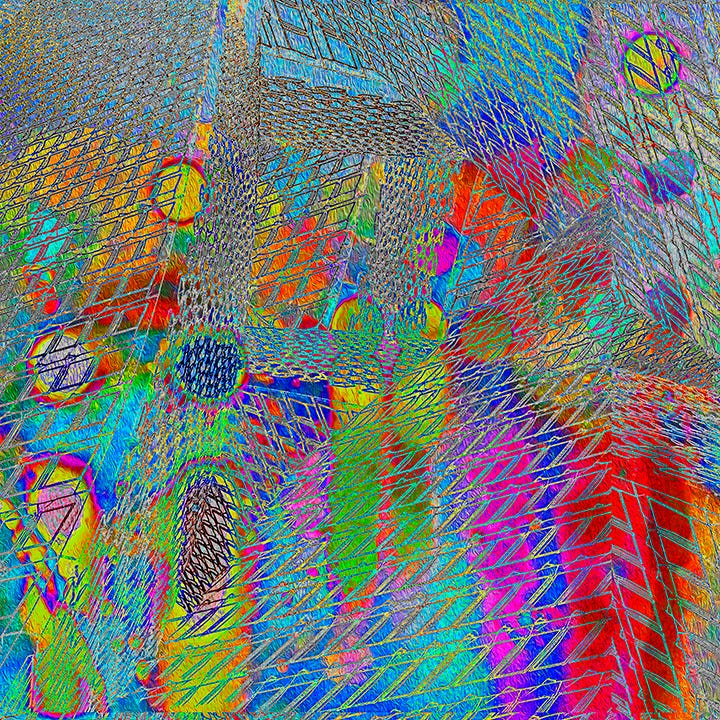
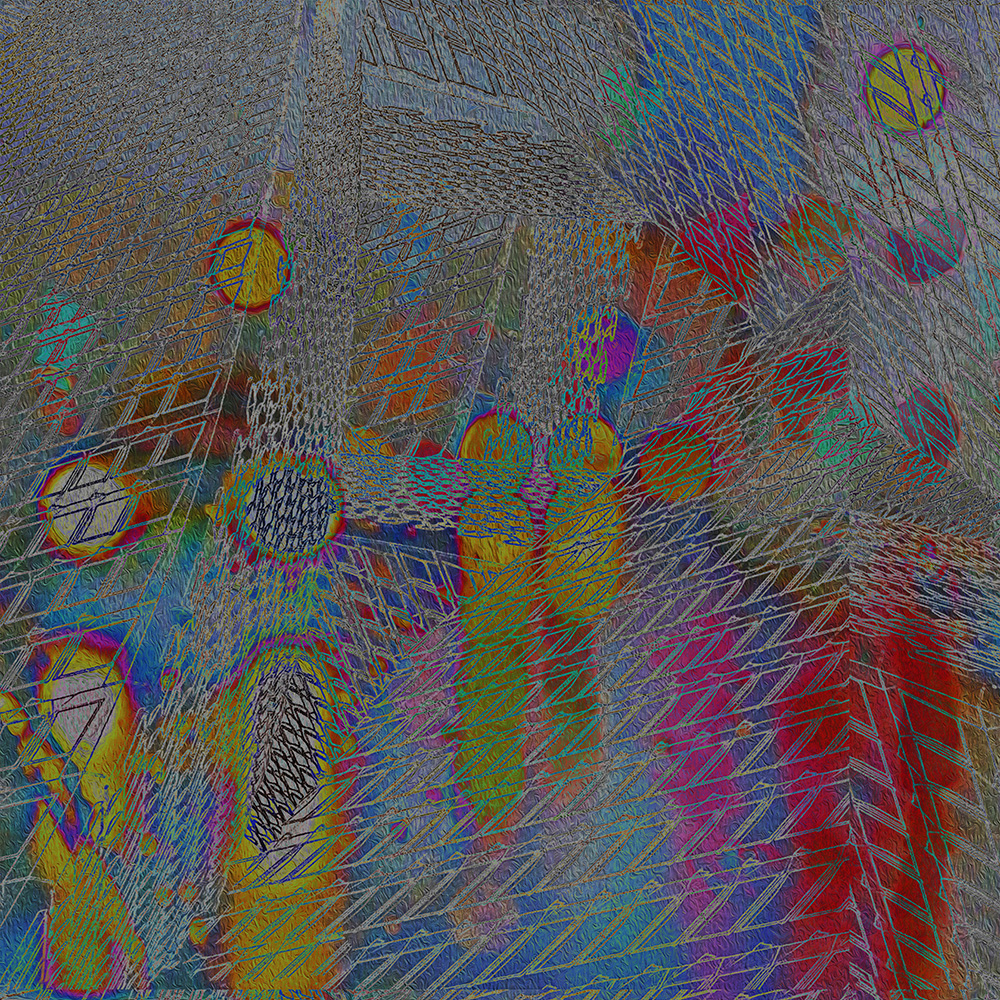
In the image below, Big City Traffic, I created the background by melding different photographs of the TransAmerica Pyramid in San Francisco for the background, and overlaying them with bidirectional evening traffic on Solano Avenue, Berkeley. I added some personal condiments.
So why not take an MRI of your own intestines, scan it, add tennis balls, crayons, wine glasses and the head of a goat? It’s all more than acceptable! Just don’t be surprised when someone asks how you did it. Be kind. Tell them what camera you used.
Good luck, be bold.