
To Comfort the Disturbed and Disturb the Comfortable: Camera Clubs, Photography and the Art World
In the country of Art World, in the great State of Photoland, lies the green and pleasant Vale of Cameraclubville, surrounded by picturesque though forbidding mountains.
Cameraclubville is populated by courteous folk, mannered, calm and serene, much given to praise of each others’ accomplishments, in the way that supermarket clerks say ‘How are you?’ as a greeting rather than question.
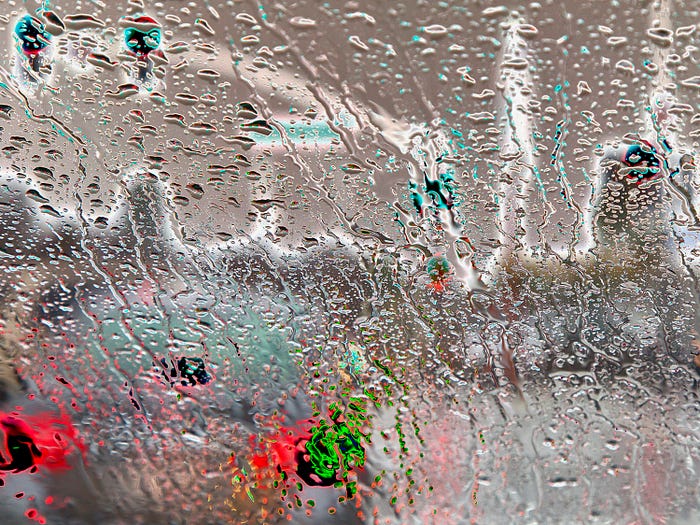
The town is neatly laid out, with most streets curving and looping around a central core, and the surrounding fields are filled with flowers and irrigated by streams that flow in irregular diagonals, dividing the land into thirds. The sunlight is concentrated off-center.
The topography of the Vale of Cameraclubville makes it difficult for people to enter or leave, and so, except for the peregrinations of a few hardy souls, the population remains stable for decades at a time: the same people sharing the same ideas in the same place.
To those who enter, and especially those who re-enter regularly, Cameraclubville is a haven of security, a place of certain golden sunsets serving as valium for the spirit, just as its ideas are aspirin for the headache of risk. In truth, the Vale is a well kept secret to the citizens of Artworld, perhaps less by design, than because the reverse is also true.
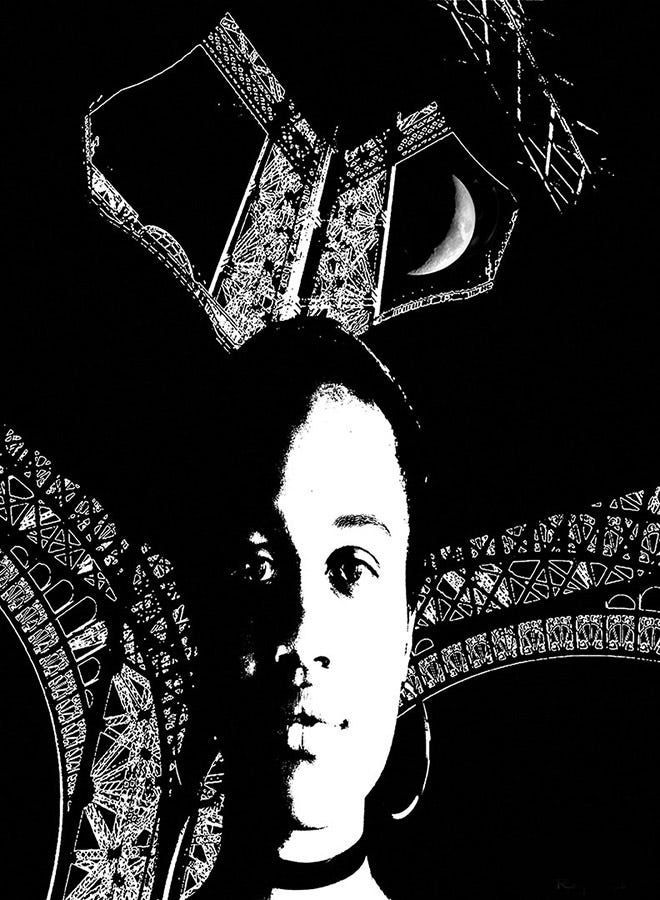
The central concern of this story is less about the ways in which Cameraclubville evolved than what it represents in the hue of photography, within the broader spectrum of art.
The camera club in which I once presided is situated in Berkeley, California, a city where intellectual accomplishment is commonplace, where a gentleman in a tweed coat and leather elbow patches might almost as easily be a Nobel laureate as a retired librarian. In this setting of cerebral adventure, it is an interesting speculation to wonder how many members of the Club visit the many photographic and non-photographic art galleries and art exhibits each year and how often.
It may be interesting to speculate about how many members regularly familiarize themselves with the significant proportion of the thousands of images and pages of descriptive/analytical materials available freely in local libraries and bookstores.
If, as one might be led to suspect from the technically competent, aesthetically repetitive body of work that appears each year, the fine citizens of Cameraclubville are dedicated to some purpose, then it is appropriate to discover the nature of that purpose. It appears to be the development, storage and enshrinement, of, as though for future archaeological discovery, of Yet More Standard Stuff (YMSS).
True, as chemistry, physics, electronics and sheer dedicated practice improve, so there seems to be an advance in the technical excellence of YMSS, so that ultimately we can look forward to a computerized robot using a computerized camera, instructed by a computer, to march out at suitable times to explore ever more perfect pictorial YMSS.
This would permit the people of the Vale to totally, rather than partially, disengage their minds, vision and emotions.
The first and most proximate casualty of these developments would be that fine institutions of higher learning known as Yet More Standard Stuff University (YMSSU).
Unable to maintain a scholarship in Rule of Thirds Theory and The Joy of Filtration, it would have to close its doors, and heaven knows what revolutionary thought might flow into the vacuum. The Faculty, known as the Judges of Cameraclubville, would be cast out on their eyes. Now they would no longer be able to propound rules ranging from the inane (i.e., no intervention of the mind) to the insane (dysfunctional intervention of the mind).
The intellectual condition of Cameraclubville should come as no great surprise. Each time I have exhibited, some genuinely kind soul, suffering from camera-advertising irradiation, is sure to ask the wonderfully ingenuous question ‘Uh. . . What kind of camera did you use?’
Steady, I tell myself, he’s probably a graduate of YMSSU, where this kind of curiosity is encouraged. In its School of Interdisciplinary Studies, students are urged to attend book-autographing cocktail parties and ask the author, ‘What word processing program did you use?’
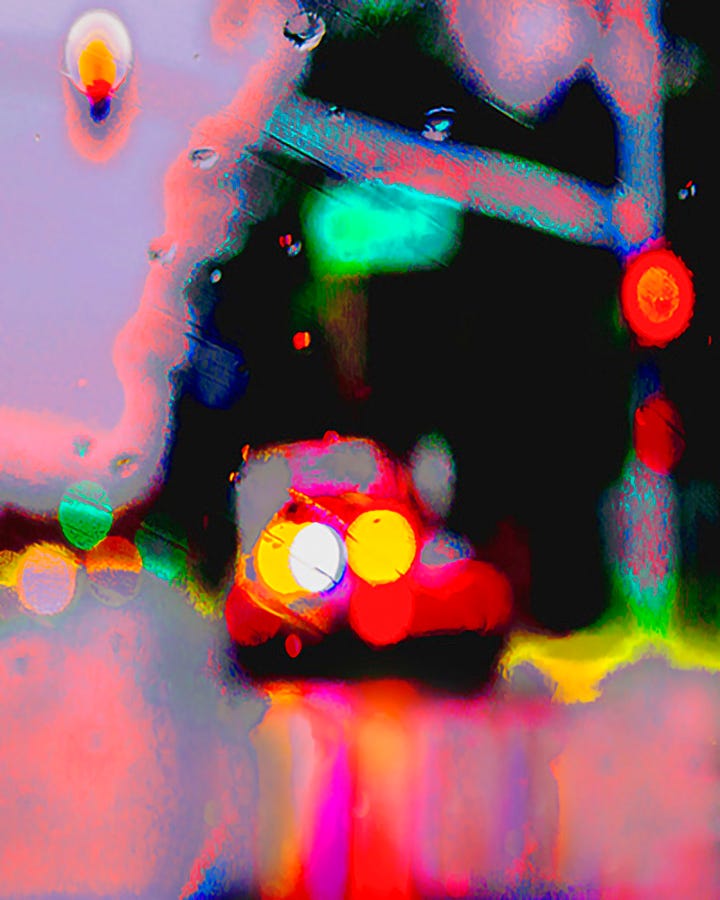
The comfortable of Cameraclubville may be further disturbed to discover that, even before the gates of YMSSU are bolted, revolutionaries are at work. Actually they’ve been at work out there in Photoland for decades. A few, encouraged by the challenge of new obstacles to overcome, are penetrating the mountains around the Vale, and some of the local residents have been venturing out, to MOMA and other risky places.
What a change, what a renewal, what a risk it is for the mind and the spirit to see and assemble our own view of ourselves and the universe instead of just what the viewfinder permits! It is drinking the intoxicating liquor of creativity rather than the chemistry of E-6.
Of late, more and more photographers are, quite properly, aspiring to be artists. Artistry, of course, is in the aesthetic quality of the product of whatever medium is chosen; it is not inherent in the medium itself.
Why then do those who aspire to making photographs first learn how to operate a piece of equipment, rather than to think, see, visualize, feel? After all, painters, sculptors, graphic designers are not taught that way. Perhaps it is because there is a great, albeit simplistic, comfort in the notion that art can be produced ex machina, and it is precisely in this falsehood that lie the elements of comfort for the disturbed, the seekers, the risk-takers and the artists.
Where, then, do the disturbed find comfort? They do so in discovering the nature and uses of the medium, and in extending, adapting, re-creating, re-forming the boundaries of vision and thought, and the infinite ways in which vision and thought can be represented, and by which the medium itself can be redefined.
The development of the art of photography requites challenge to the gospel of composition, resistance to the tyranny of the machines, and disobedience to the imagination-destroying canons of YMSSU.
Mere recording of an inherently beautiful object does not at all partake of creativity, and I am constantly disturbed by the technically fine reproductions of the flowers-and-reflections-and-sunsets school. They seem not to have learned yet that the camera is, of itself, a particularly limited means of capturing great beauty, and therefore that their efforts require even more thought and insight to be worthwhile.
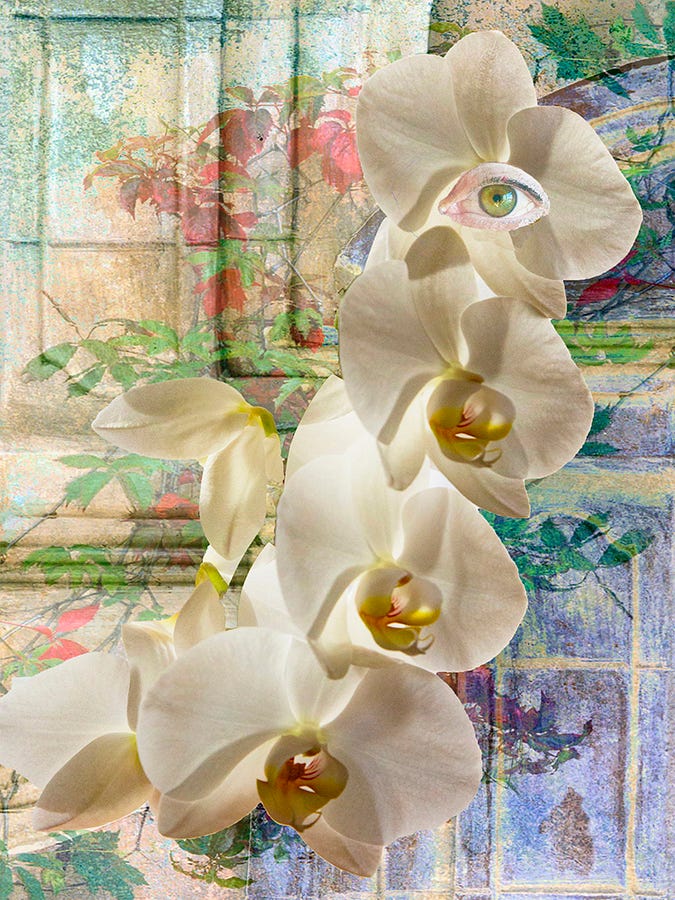
Photographs that are ‘read’ easily, that do not ask more questions than they answer, show little effort from the photographer and expect none at all from the viewer. It is not necessary for a photograph to ‘tell a story’ or ‘make sense’ in the conventional way in which we understand these things; it is necessary for good photography to please and disturb and challenge the many visions and imaginations of those who see it.
The need for communication, education, and risk, is, however, not limited to those who make images with light. There is ample evidence that practitioners of other art forms are equally in need of investing the means of communication with vitality.
I recently spent a few days in that idyllic village, Carmel-by-the-Sea, and visited a number of its many galleries. I was moved by the magnificence of Olivia Parker’s still-life studies, by the grandeur, once again, of Ansel Adams’ vision, and the work of the Westons, père et fils; Karsh’s portraits of Hemingway, Casals, Churchill, retain their classic power; and the work of many younger, thoughtful, risking photographers fill me with the pleasure of hope.
By contrast, the painting galleries were filled with tourist-trap-sunset-seascapes and a vast collection of neoimpressionist kitsch that threatened to cause visual diabetes.
I hope to see tunnels built through the mountains around the Vale of Cameraclubville, and perhaps an airport. It is high time for a greater coming and going among its residents and the people of Photoland and Artworld. Thus far, the Vale has been a good place to relax, to unwind, to vacate. I’d like to enjoy the option of living there, and thinking differently.
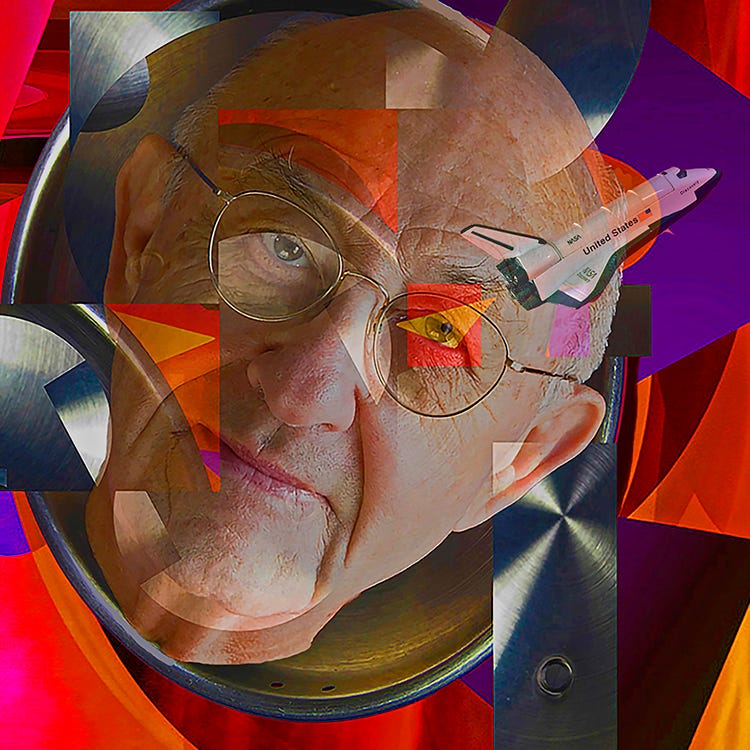
This essay, in slightly different form, was my very first of scores of pieces on photography, creativity and art. The original was published in The Journal of the Photographic Society of America in December 1987. This writing reflects the frustration I felt at the time with the constant repetition of familiar themes and rigid ideas.
I’m happy that there have been welcome changes over the past 32 years, partly because of the evolution of digital media, and partly the increased willingness of artists in all media to cross boundaries and to engage in greater experimentation.
Perhaps, to some extent, plagiarism may be inevitable. Too many photographers try to do Adams, Bullock, Weston, Lange, Mann, Arbus, Strand, Sherman, Mark, Uelsmann, Kenna. Risk is an essential element of creativity. As I’ve written elsewhere, “There’s nothing intrinsically wrong with seeing the world through the eyes of others. After all, a lot of teaching and learning happens that way.
But there is much to be said for also seeing the world through one’s own eyes. What’s the point of standing upon the shoulders of giants if your only vision is downward?”